A few weeks ago I was at a store and tried to pay for part of the item with a $20.00 gift card and the rest with my credit card. When I looked at the receipt, there was an error. The total amount was $50.00, so I expected my credit card to cover the remaining $30.00. Instead it rang up as an additional $40.00. When I mentioned it to the young salesclerk, he looked very confused. He took out his phone and tried to do the subtraction. He said he didn’t understand how $50 minus $20 was $30. The young manager came over and she seemed pretty shaky about the numbers too. Then it dawned on me. I’d been reading about a large proportion of college students were unable to do basic math, even elementary school math. I was looking at an example. It also made me think that companies have to adapt to poor education.
What Is Going on?
We have heard talk recently that AI is going to dumb down the population. People will become so dependent on it to do their thinking, that they will lose the ability to do basic mental tasks. I don’t know about AI, but we are seeing that already. Schools are having students do more and more on electronic devices and less and less on paper. Instead of doing math by hand, they are learning to use devices. This isn’t new. When I was in school, we learned to do our statistical calculations by hand. When computers came online, many faculty stopped teaching the calculations and just had students use computers. Those students learned how to run the statistics, but they often did not understand what those statistics were. They just input the data and outputted the results. Certainly students need skill in using computer tools as it increases efficiency and reduced drudgery. But this should not be at the cost of knowledge and understanding of what the computer is doing for us. The tools should make us smarter, not dumber.
Companies Have to Adapt to Poor Education
For companies there is a tradeoff between selection and training when it comes to acquiring talent able to perform needed tasks. Sometimes there are enough skilled people to choose from that the company can use selection tools (e.g., pre-employment assessments) to screen individuals on the KSAOs (knowledge, skill, ability, and other characteristics) that they need. When there aren’t enough skilled people to choose from, companies have to invest in training. Unless the educational system improves, companies might find themselves having to take up the slack and train basic math and verbal skills for at least some of their hires. For better or worse, companies have to adapt to poor education in order to remain competitive in a rapidly changing environment. This is going to become even more challenging as AI displaces the workforce, requiring humans to perform increasingly complex tasks that many will need training to learn.
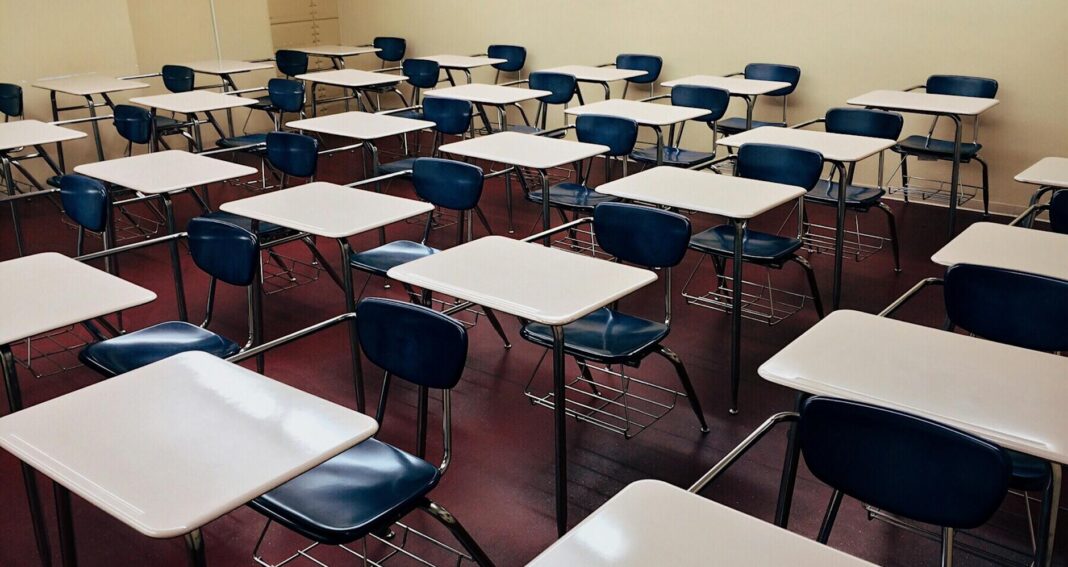
Image from Pexels
SUBSCRIBE TO PAUL’S BLOG: Enter your e-mail and click SUBSCRIBE